Buying solar equipment in volume differs from retail in two ways: price follows quantity and delivery terms rather than a list, and what you buy is not only hardware but a warranty commitment, serial traceability and technical support. This guide covers how a wholesale order is structured, what a usable RFQ contains, and how to evaluate a supplier.
How wholesale ordering works
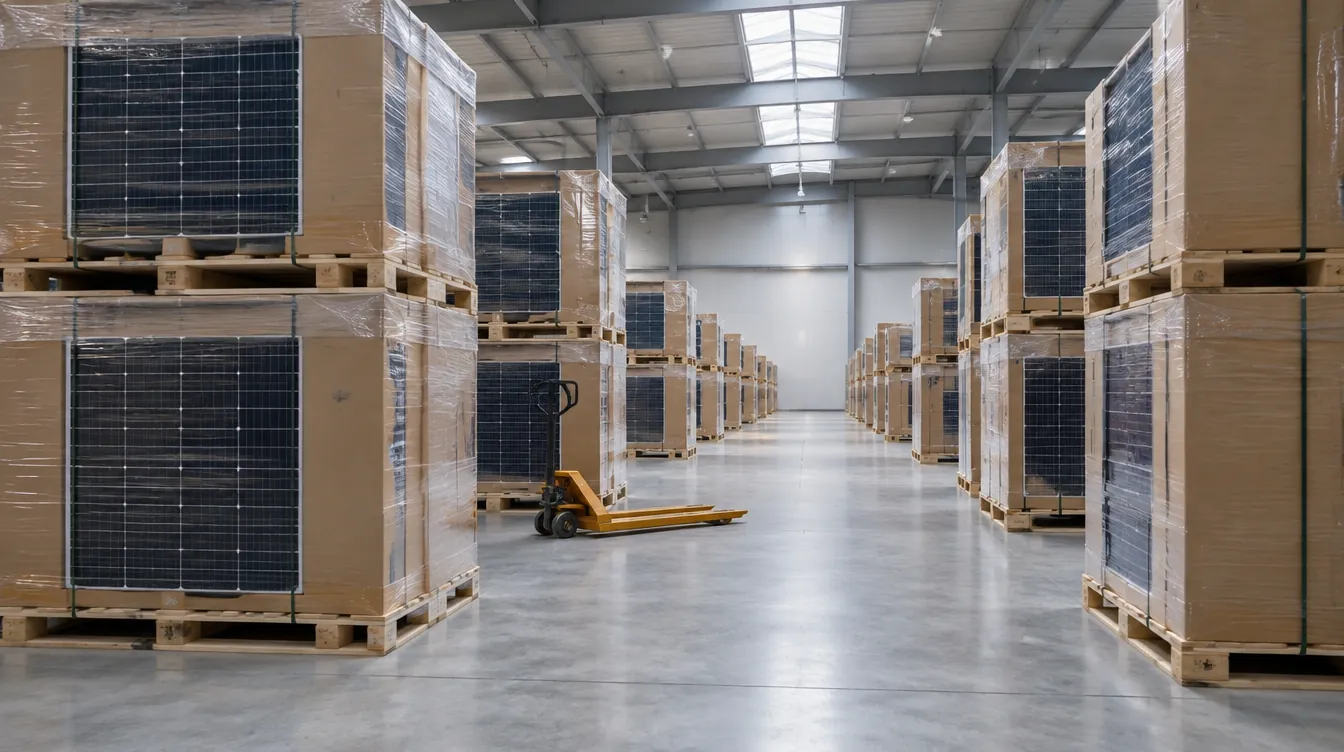
Wholesale pricing is tiered, and the tiers follow packing units rather than arbitrary numbers. Standard modules ship on pallets, typically around 30 to 36 pieces depending on size and frame thickness, with larger orders quoted per container. Inverters and controllers are counted by carton, so their tiers are finer. The closer an order sits to a full packing unit, the lower the freight cost and the handling damage risk.
Panels and inverters also behave differently on lead time. A panel is bulky but largely standardised, and equivalent models from several manufacturers are usually interchangeable; the constraints are shipping, storage and working capital. An inverter is compact but tied to a model, a firmware version, grid settings and an after-sales channel, so it is not easily substituted. In practice, fix the inverter model before the panel and define an alternative for it. Comparison starts from the solar inverter range.
What a usable RFQ contains
Most enquiries that go unanswered simply lack the information needed to price them. A complete request states:
- Your role: project contractor, reseller, or prospective distributor
- Exact quantity and the tolerance you accept
- Technical specification: power class, cell type, open-circuit voltage and short-circuit current window, connector type
- Preferred brand, and whether a technical equivalent is acceptable
- Delivery terms and destination
- Schedule: one shipment or phased, and the date you actually need it
- Expected payment terms and documentation
- Required paperwork: datasheets, warranty certificate, proof of authenticity
The more precise those eight points, the faster and firmer the answer. Submit them through the request for quotation form.
How to evaluate a supplier
A few percent on price means nothing against a warranty that is never honoured. Check these before ordering.
| Area | Ask | Good sign |
|---|---|---|
| Warranty | Who issues it, for how long, and how a claim is processed | A written certificate with a defined procedure |
| Traceability | Can each serial number be verified? | A serial lookup and authenticity label on the goods |
| After-sales | Repair or replacement, and response time | Spare parts held in stock, a defined escalation path |
| Technical support | Is my installer supported on site? | A reachable engineer and commissioning training |
| Documentation | Is an official datasheet available per model? | Full specifications and declarations of conformity |
Serial verification is described on the product authenticity page and coverage on the warranty terms page. These two, more than any number, separate a durable supplier from a temporary one.
Contractor, reseller, or appointed distributor
The three roles carry different obligations. A project contractor buys per project with no ongoing commitment and needs a firm price and delivery date. A reseller buys on demand and needs stable stock and trade pricing. An appointed distributor accepts a periodic purchase commitment and stock-holding in return for a defined territory, training and technical support, and takes responsibility for supporting end customers locally.
As an industry norm, a distribution agreement also brings obligations: an agreed territory, a minimum periodic purchase, stock cover, completion of technical training, adherence to installation and warranty procedures, and regular reporting. Those are general market practice rather than any single company's published terms; the actual terms are set in the agreement itself. Applications go through the distributor application, and the current network is listed under dealers and partners.
What to prepare before applying
- Registration documents for the company or trader
- Relevant track record in electrical equipment, solar installation or technical service
- Warehouse space able to hold pallets, and display space if possible
- At least one technician able to install and commission, or a plan to train one
- An assessment of local demand: residential, agricultural or industrial
- An initial purchase plan matched to your working capital
- An after-sales plan: who answers the end customer in your area
Frequently asked questions
What is the minimum order for wholesale solar panels?
There is no fixed figure; it depends on the product, current stock and delivery terms. The practical unit is the packing unit, a full pallet for modules and a carton for inverters. The precise answer comes from a quotation request stating your quantity and schedule.
How does wholesale buying differ from a distributorship?
Wholesale is a one-off transaction that ends with delivery and warranty. A distributorship is an ongoing relationship defining territory, purchase commitment, training and responsibility for supporting end customers. If you intend to sell continuously in one region, the distributor route fits better.
How do I verify that panels and inverters are genuine?
Check the serial number on the product and packaging against the supplier's verification system, and obtain a written warranty certificate. Ask for the official datasheet of that exact model and compare it with the label on the back of the module. A mismatch in power class or cell type is the first warning sign.
Related products
All Solar Panels