
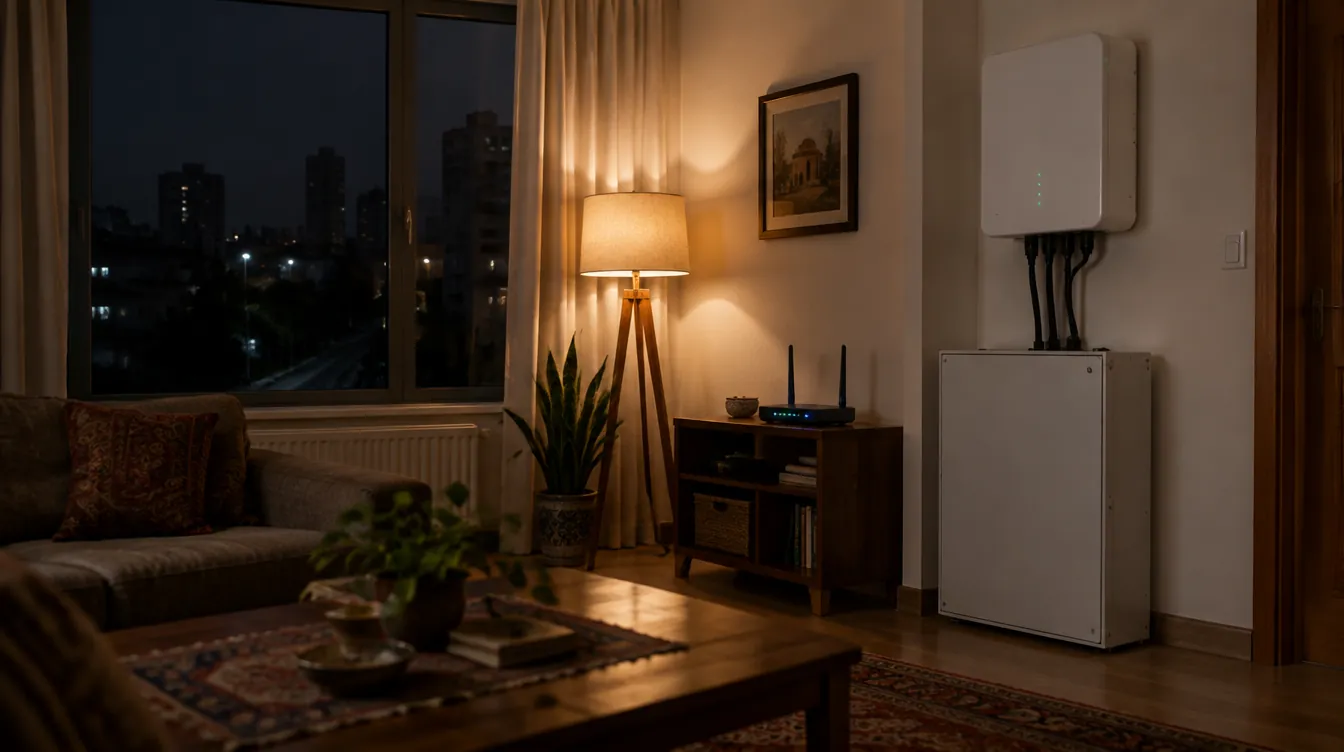
When the power goes out, the first question is rarely "which device is best?" but "what happens to the fridge, and will the internet drop?" Scheduled or unexpected outages have made home backup power an everyday need. Start with a list, pick the system, then size the battery.
Step one: list what must stay on during an outage
Write down only what you truly need during an outage: a few lamps, the modem and router, the fridge, the TV, chargers and perhaps a water pump. Read each one's power from its label. This list decides whether a small desktop unit is enough.
Watts (W) vs volt-amperes (VA)
UPS units and inverters are often rated in VA (apparent power), appliances in watts (real power). Watts are roughly VA × power factor, which varies by device and is in each datasheet. Never compare VA directly with your total watts, and leave a margin.
Power (W) vs energy (Wh)
Watt-hours = watts × hours. The inverter must handle the power of everything running at once; the battery must store enough energy for the outage.
Hypothetical example (round numbers for illustration only; read the real ratings from your own appliances) for a 4-hour outage:
| Appliance | Assumed power | Time on during outage | Energy |
|---|---|---|---|
| 4 LED lamps | 40 W (4 × 10) | 4 hours | 160 Wh |
| Modem and router | 15 W | 4 hours | 60 Wh |
| Fridge | 150 W | about 2 hours of compressor running | 300 Wh |
| TV | 100 W | 2 hours | 200 Wh |
| Laptop and phone charging | 60 W | 2 hours | 120 Wh |
| Total | 365 W at once | — | 840 Wh |
The compressor does not run continuously, so a shorter time is assumed. Motors usually draw several times their normal power at start-up, so rate the unit above the simple total.
Four ways to get home backup power
The best option matches your list and outage pattern.
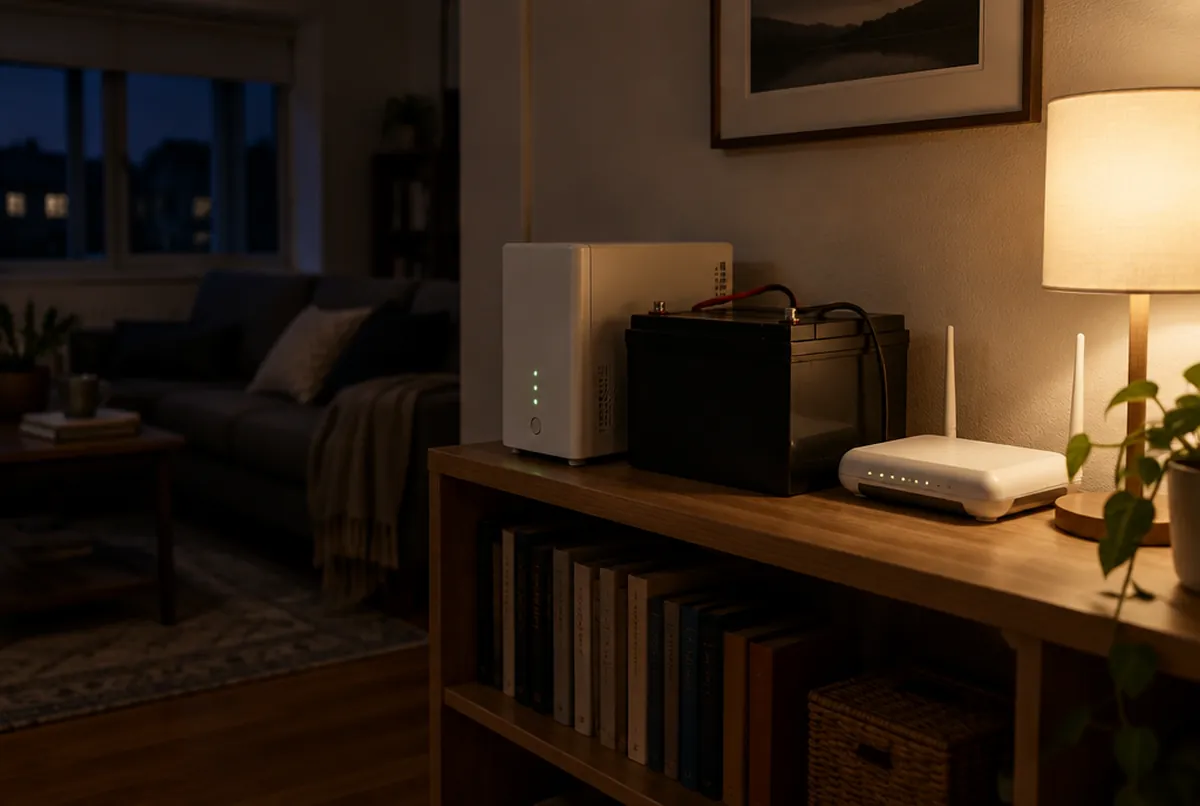
| Option | How it works | Suits | Limitation |
|---|---|---|---|
| UPS | Battery-backed; no or a very short break | Modem, router, computer, CCTV | Usually for small loads and short times |
| Pure sine inverter charger with battery | Charges the battery on grid, runs from it in an outage | Lamps, fridge, TV, modem for a few hours | Battery may not recharge between long outages |
| Hybrid inverter + battery + solar panels | Also makes fresh energy by day | Long or frequent outages, with free roof space | Needs more investment and design |
| Generator | Makes power from fuel | Heavy loads and very long outages | Noise, fumes, fuel and open space needed |
UPS: for internet and computers
To keep the internet up or protect a computer, a UPS is simplest; online units suit sensitive equipment better than offline ones. See online UPS vs offline UPS and the UPS category.
Pure sine inverter charger: the most common home unit
It keeps one or more batteries charged and takes over when the power goes. The off-grid inverters and chargers category includes the Power Solid 1 kW pure sine inverter charger with LCD display and Medal Power 2000VA and 3000VA pure sine units. Some also accept solar input; see what a sunverter is.
Hybrid inverter with solar, and generators
If outages repeat for hours daily, a hybrid system's panels add fresh energy; see hybrid inverters. A generator handles heavy loads but, because of carbon monoxide, must never run indoors, in a stairwell or a garage.
How to size the backup battery
Nominal energy is roughly voltage × Ah, but only part is usable, set by the depth of discharge (see what battery DoD is).
Required Ah ≈ Wh needed ÷ (battery voltage × usable depth of discharge)
Hypothetical example: 840 Wh at 12 V, using about half a lead-acid battery: 840 ÷ (12 × 0.5) ≈ 140 Ah. With a deeper-discharge factor of 0.8, it falls to about 90 Ah; at 24 V the Ah roughly halves. Add margin for inverter losses and check each datasheet.
Sealed and gel batteries are common but heavier; LiFePO4 is lighter and tolerates deeper discharge (see lithium vs lead-acid battery for solar). Bank voltage must match the inverter.
Pure sine or modified sine?
Modified (stepped) sine output suits lamps and chargers, but motors and compressors run hotter and hum on it. If a fridge or pump is on your list, choose pure sine and confirm it in the datasheet.
Safety, installation and a pre-quote checklist
These systems work with high DC battery currents, and wrong connections are dangerous.
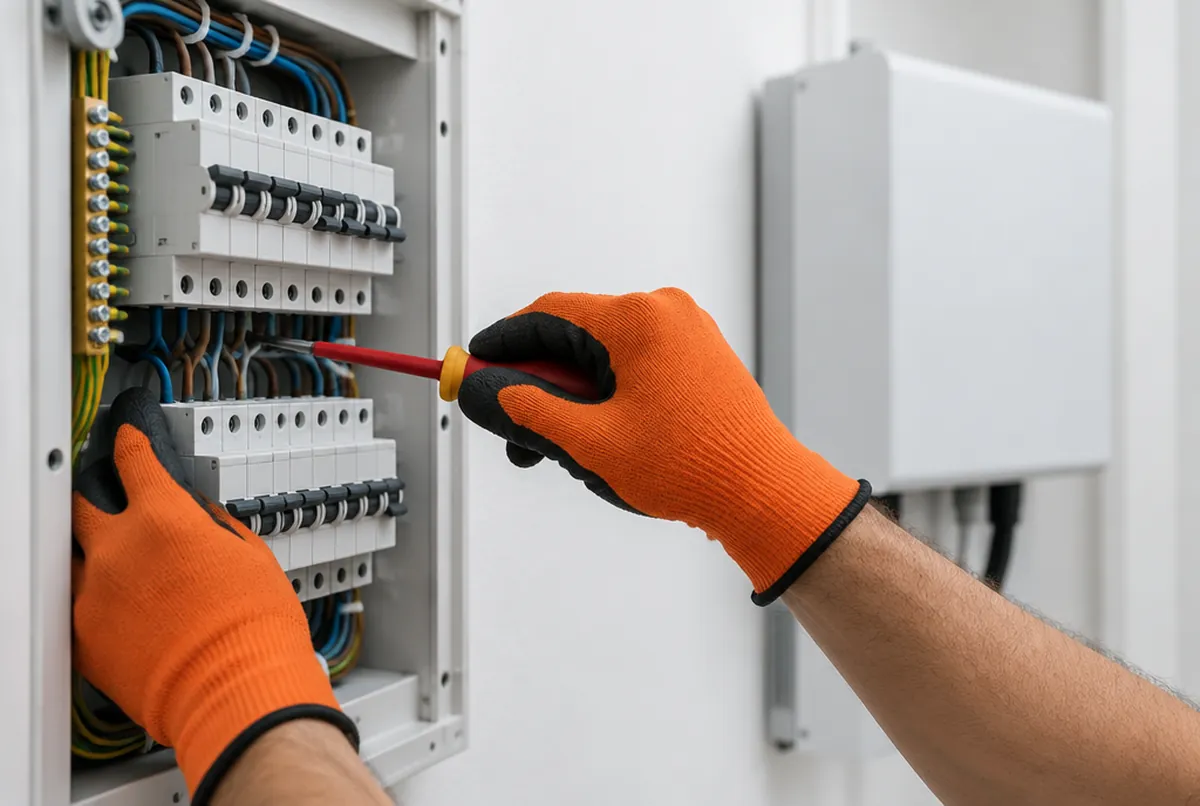
- Connecting the unit to the home distribution board and separating essential circuits must be done only by a qualified electrician or installer.
- Backup power must never feed back into the grid, as it endangers repair crews; isolation is the electrician's job.
- Keep lead-acid batteries dry and ventilated; let the installer size cables and fuses.
For a quote, prepare your appliance list with watts, outage length and frequency, space for the unit, battery preference and any roof space. Noora Tajdid Paziran ships from Tabriz with an authenticity guarantee and official warranty, and offers wholesale and installer pricing. Send your list through the quote request form.
Frequently asked questions
What is enough for a modem and a few lamps?
Usually a small UPS or desktop inverter charger with one battery, rated above their total watts with a margin.
Can a fridge run on home backup power?
Yes, with pure sine output and enough power for the compressor's start-up surge.
Why does my inverter show VA while my appliances show watts?
VA is apparent power; compare the unit's watt rating with your total watts.
Is an inverter charger enough if outages happen daily?
Usually, if the battery can fully recharge between outages; otherwise a hybrid inverter with panels is more dependable.