A 10 kW solar system is a set of panels rated about 10,000 watts in total: the array's DC peak power under standard test conditions, not the power you get at every moment or the energy made in a day.
What does 10 kW mean? kW vs kWh
A kilowatt measures power at one instant; a kilowatt-hour measures energy over time, the number on your bill. A 10 kW array makes several tens of kWh on a sunny day, not 10 kWh. The rating is a peak value at 1000 W per square metre, so heat, dust and cable losses keep real output below it most of the time.
How many solar panels for 10 kW?
Number of panels = 10,000 ÷ panel wattage, rounded up. Because there are no half panels, the array lands slightly above or below 10 kW. The table only illustrates the arithmetic:
| Panel (example) | 10,000 ÷ rating | Rounded up | Array | One panel fewer |
|---|---|---|---|---|
| 450 W | 22.2 | 23 | 10.35 kW | 22 panels = 9.9 kW |
| 550 W | 18.2 | 19 | 10.45 kW | 18 panels = 9.9 kW |
| 585 W | 17.1 | 18 | 10.53 kW | 17 panels = 9.945 kW |
| 620 W | 16.1 | 17 | 10.54 kW | 16 panels = 9.92 kW |
The final count depends on the chosen module and string design: each series string must stay inside the inverter's MPPT voltage window at all temperatures. Nineteen panels cannot form two equal strings, so a designer may use 18 or 20. See the solar panels category; at this size high-wattage monocrystalline modules are usually chosen to reduce module count and racking.
How much roof space is needed?
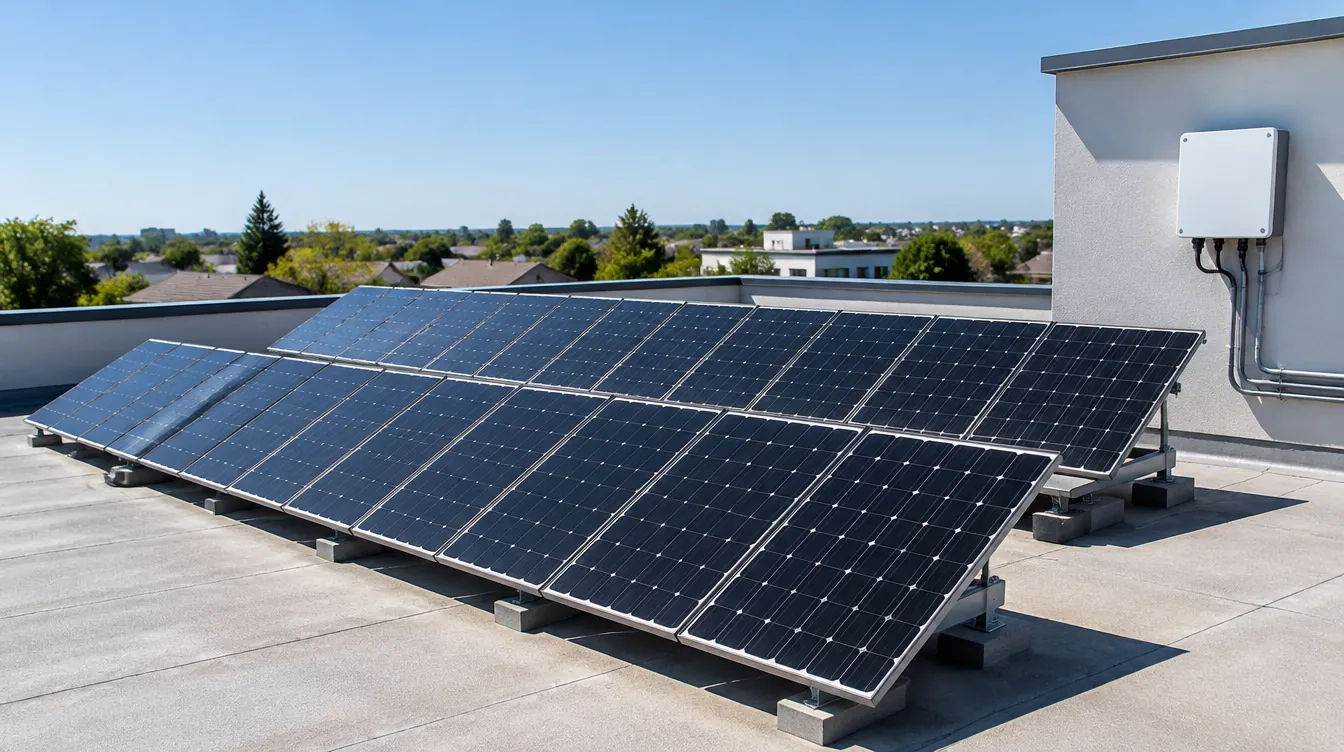
The modules themselves need roughly 4.5 to 5.5 m² per kW, so about 45 to 55 m² for 10 kW, enough when mounted flush on a pitched roof. On a flat roof, tilted rows need spacing so they do not shade each other; plan for about 8 to 12 m² per kW, or roughly 80 to 120 m² of clear roof. Module size, tilt and winter shadows change these rules of thumb; for pitched roofs see our pitched-roof mounting guide.
Daily energy, and what savings depend on
Daily energy (kWh) ≈ array power × peak sun hours × performance ratio. Peak sun hours (PSH) vary by region and season; the performance ratio covers temperature, dust, cable and inverter losses and is usually 0.75 to 0.85.
Hypothetical example: with PSH taken as 4.5 hours for illustration only, 10 kW gives about 34 to 38 kWh a day (10 × 4.5 × 0.75 ≈ 34; 10 × 4.5 × 0.85 ≈ 38). Substitute the PSH for your own location.
Income has no fixed figure: it depends on contract type (selling to the grid or self-consumption) and actual production. See return on investment for a home solar plant and the cost structure of a home solar plant. We give no prices here because prices and terms change often.
10 kW solar inverter: on-grid, hybrid or off-grid?
On-grid inverters shut down during outages for safety, hybrids also manage a battery and power backup loads, and off-grid systems run fully independently of the grid. Our on-grid, off-grid and hybrid inverter guide covers the details.
| Criterion | On-grid | Hybrid | Off-grid |
|---|---|---|---|
| Grid connection | Yes | Yes | No |
| Battery | None | Optional or required | Required, usually large |
| Power in outages | No | For backup loads | Yes, as the battery allows |
| Typical use | Selling power or lowering bills | Home or workshop with frequent outages | Garden, villa or site with no grid connection |
| Design complexity | Lower | Medium | Higher |
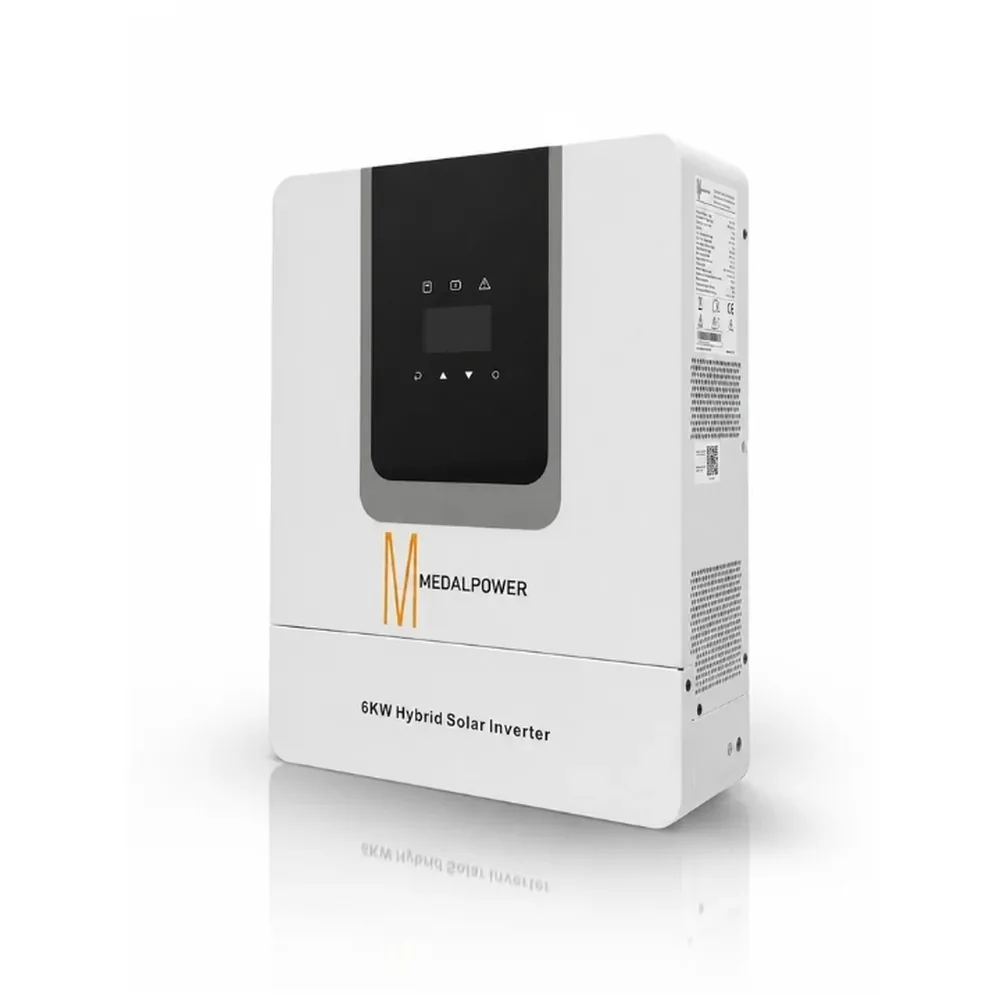
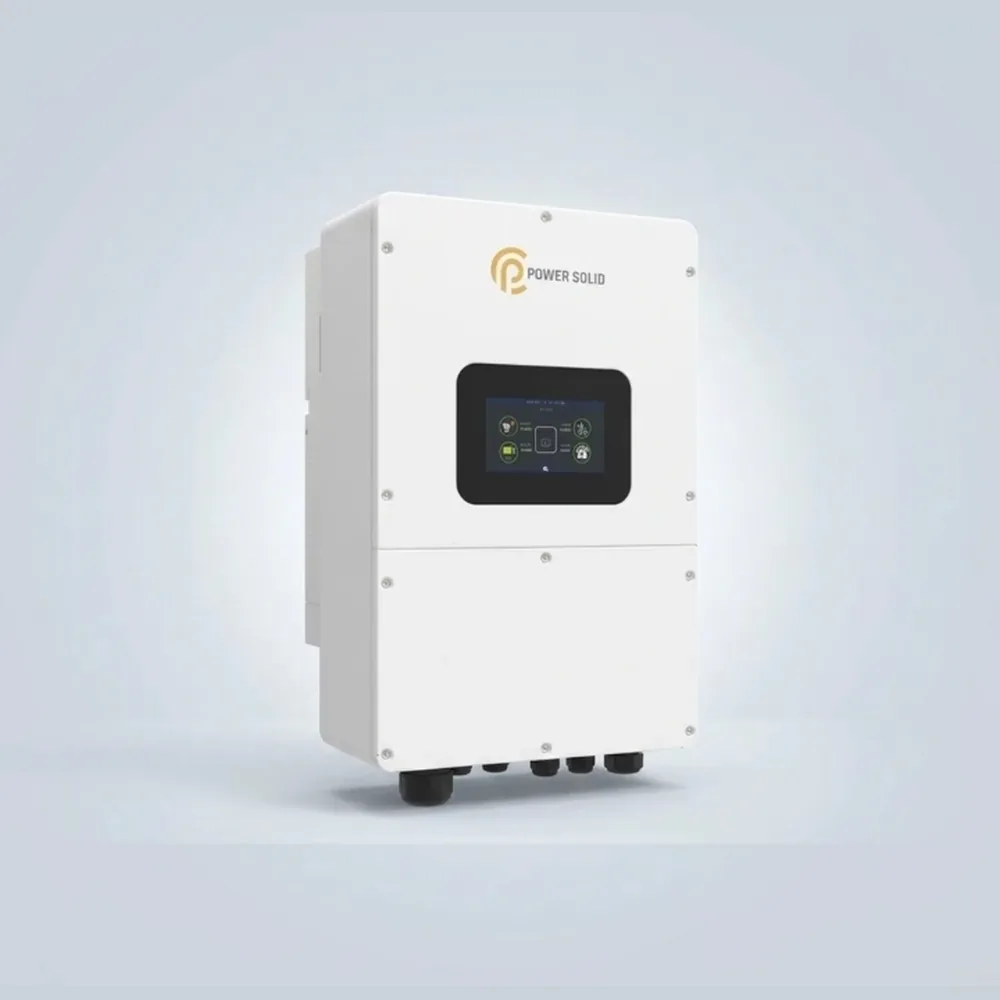
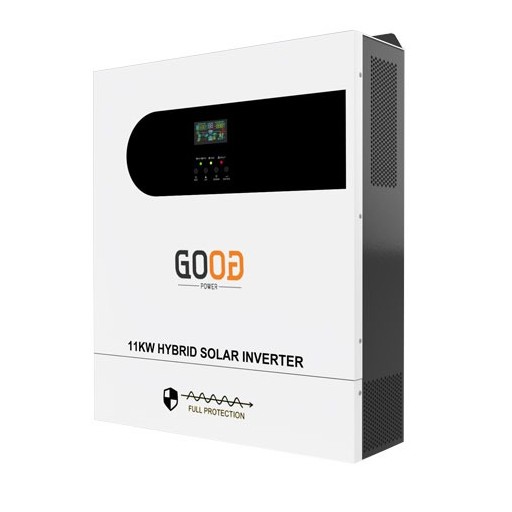
From our catalog: the Solis S5-GR1P10K single-phase 10 kW on-grid inverter (LCD display, integrated DC switch) and the Power Solid 10 kW hybrid inverter (two MPPT inputs, battery, grid and generator inputs plus a backup output). Larger options in the hybrid inverters category include the Solis 12 kW LV, Medal Power 11 kW and Power Solid 15 kW hybrids.
10 kW solar inverter: single-phase or three-phase?
Both exist. The choice depends on the building's supply, its capacity and what the distribution company requires. Three-phase spreads output across three phases; single-phase is simpler to wire, but the full current, about 43 A at 10 kW and 230 V, sits on one phase. Check with your local distribution company before buying.
Do you need batteries?
On-grid systems need none. For hybrid and off-grid, size the battery from the night-time load, not panel power, staying within the maker's depth of discharge (DoD). Nominal capacity is volts × amp-hours: a 51.2 V 100 Ah unit is 5.12 kWh, two give 10.24 kWh. Usable energy is lower.
Before requesting a quote
- A year of bills, or at least four periods, in kWh.
- Supply type and capacity, plus the distribution company's answer.
- Your goal: selling power, lower bills, backup or independence.
- Roof size, orientation, type and a photo of shading objects.
- Loads that must run at night or in outages.
Noora Tajdidpaziran ships genuine, officially warranted equipment from Tabriz to customers across Iran, with installer and wholesale pricing. Use the quotation request form.
Frequently asked questions
How many solar panels does a 10 kW system need?
About 18 to 19 at 550 W, or 22 to 23 at 450 W; string design sets the final number.
How many kWh does a 10 kW system produce per day?
Roughly 10 × local PSH × 0.75 to 0.85; with a hypothetical 4.5 PSH, about 34 to 38 kWh.
How much roof area does 10 kW need?
About 45 to 55 m² of modules; on a flat roof with row spacing, about 80 to 120 m².
Single-phase or three-phase for 10 kW?
It depends on your supply and the distribution company's conditions; ask them first.
What does a 10 kW system cost and earn?
Prices change, so none are given here; cost depends on equipment and installation, income on contract type.
Related products
All Hybrid Inverters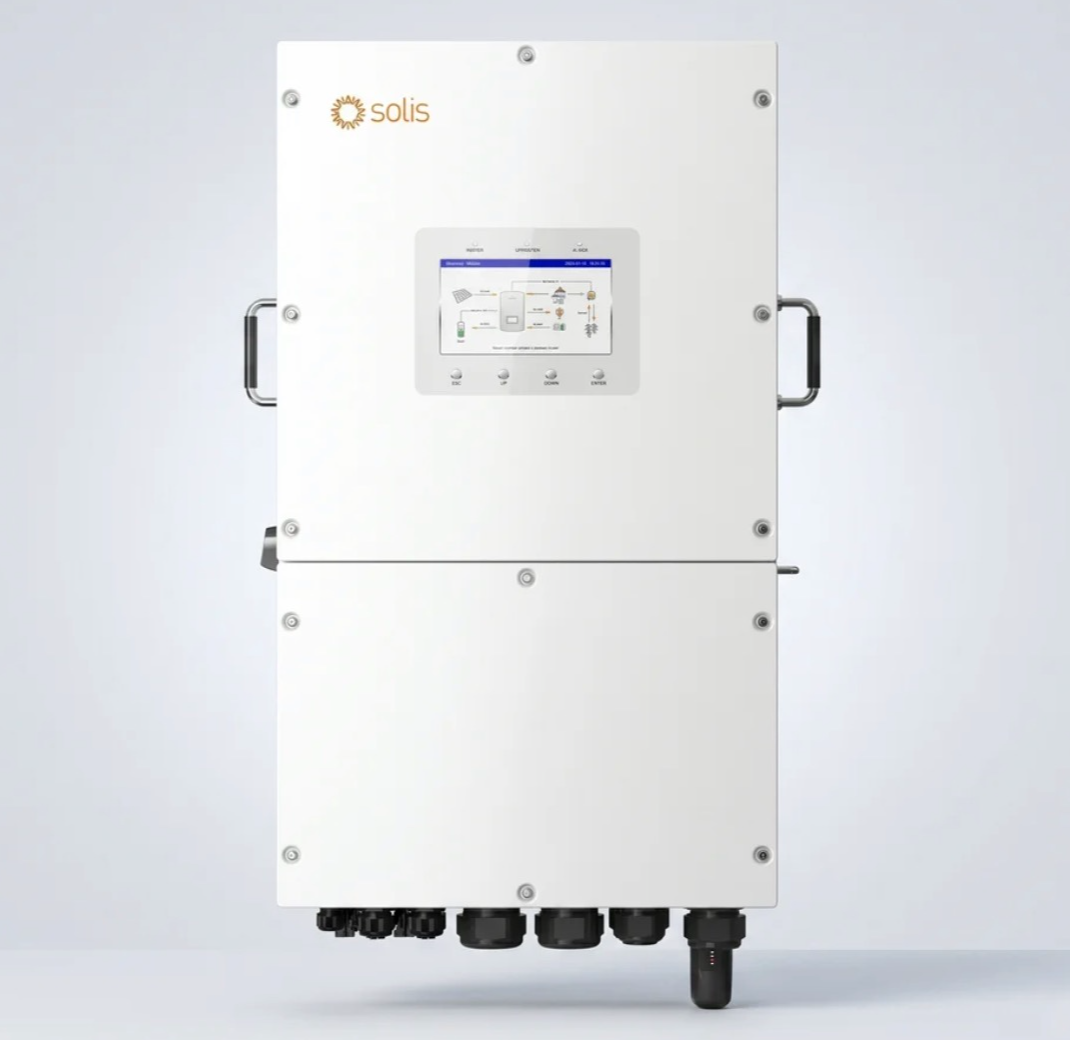
Solis S6-EH1P16K03-NV-YD-L Single-Phase 16 kW LV Hybrid Inverter