Panel count comes from electricity consumption, not from floor area or the number of rooms. The method is three steps: take the household's average daily consumption in kWh, divide it by the site's peak sun hours and by a system performance factor to get array size in kW, then divide that by the wattage of the panel you plan to buy. Roof area, tilt and shading either confirm that number or force you to raise it.
The three formulas
- Average daily consumption (kWh) = billed consumption ÷ days in the billing period
- Array size (kW) = daily consumption ÷ (peak sun hours × performance ratio)
- Panel count = (array size × 1000) ÷ panel wattage, rounded up
The solar system sizing calculator runs the same three steps for you.
Step 1: read real consumption
Use kWh from the meter, never the invoice amount — tariffs differ by country and say nothing about energy. Average at least four consecutive billing periods, ideally a full year: a summer with air conditioning and a winter with heating describe two different houses. For a new building, list appliance watts × daily running hours ÷ 1000.
Step 2: peak sun hours and performance ratio
Peak sun hours express how many equivalent hours of 1000 W/m² irradiance reach the module plane per day. Much of the MENA region averages roughly 5 to 6 hours over the year; the exact figure depends on latitude, tilt, orientation and season and should come from site irradiance data. See what peak sun hours means.
No system delivers all incident energy. Cell temperature, cable losses, inverter efficiency, soiling and module mismatch add up, so a clean, correctly installed system typically lands at a performance ratio of about 0.75 to 0.85. At 4.5 peak sun hours and 0.75, every 1 kW of array yields roughly 3.4 kWh per day; at 5.5 hours, about 4.1 kWh.
Step 3: kilowatts to panel count
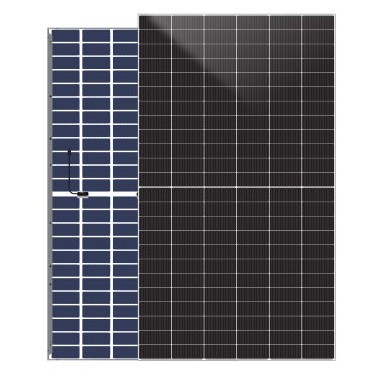
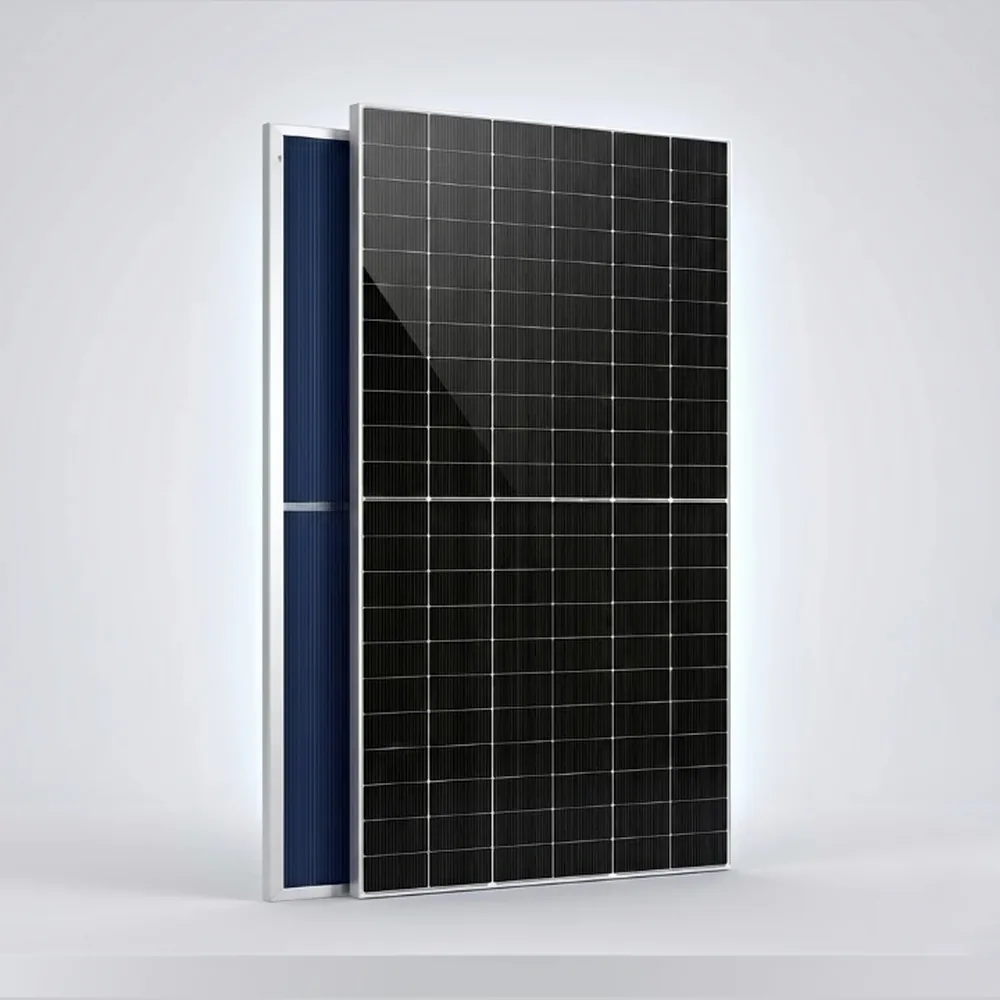
Divide array size by panel wattage. Mainstream modules run roughly 450 to 600 W and commercial monocrystalline efficiency is roughly 19 to 23 percent; the datasheet is the authority. Compare wattages and dimensions on the solar panel category page. One constraint the arithmetic hides: strings must sit inside the inverter's MPPT window, which is why a design sometimes moves from 9 modules to 10 to keep strings symmetrical.
Indicative panel count by consumption
The table below is those formulas at 4.5 peak sun hours and a 0.75 performance ratio — an estimate, not a design.
| Monthly use (kWh) | Daily average | Array (kW) | 450 W panels | 580 W panels | Module area |
|---|---|---|---|---|---|
| 200 | 6.7 | 2.0 | 5 | 4 | ~12 m² |
| 300 | 10 | 3.0 | 7 | 6 | ~17 m² |
| 450 | 15 | 4.4 | 10 | 8 | ~24 m² |
| 600 | 20 | 5.9 | 14 | 11 | ~34 m² |
| 900 | 30 | 8.9 | 20 | 16 | ~48 m² |
On-grid and off-grid are sized differently
On-grid, the grid is the store: daytime surplus is exported and evening demand imported, so the design basis is annual consumption. Off-grid there is no fallback — size to the worst month and add days of autonomy for one or two overcast days. Depth of discharge matters too: LiFePO4 is typically usable to roughly 80 to 90 percent of nameplate and lead-acid to about 50 percent, so an off-grid array for the same house comes out noticeably larger. See the on-grid, off-grid and hybrid inverter comparison.
Roof area, orientation and shading
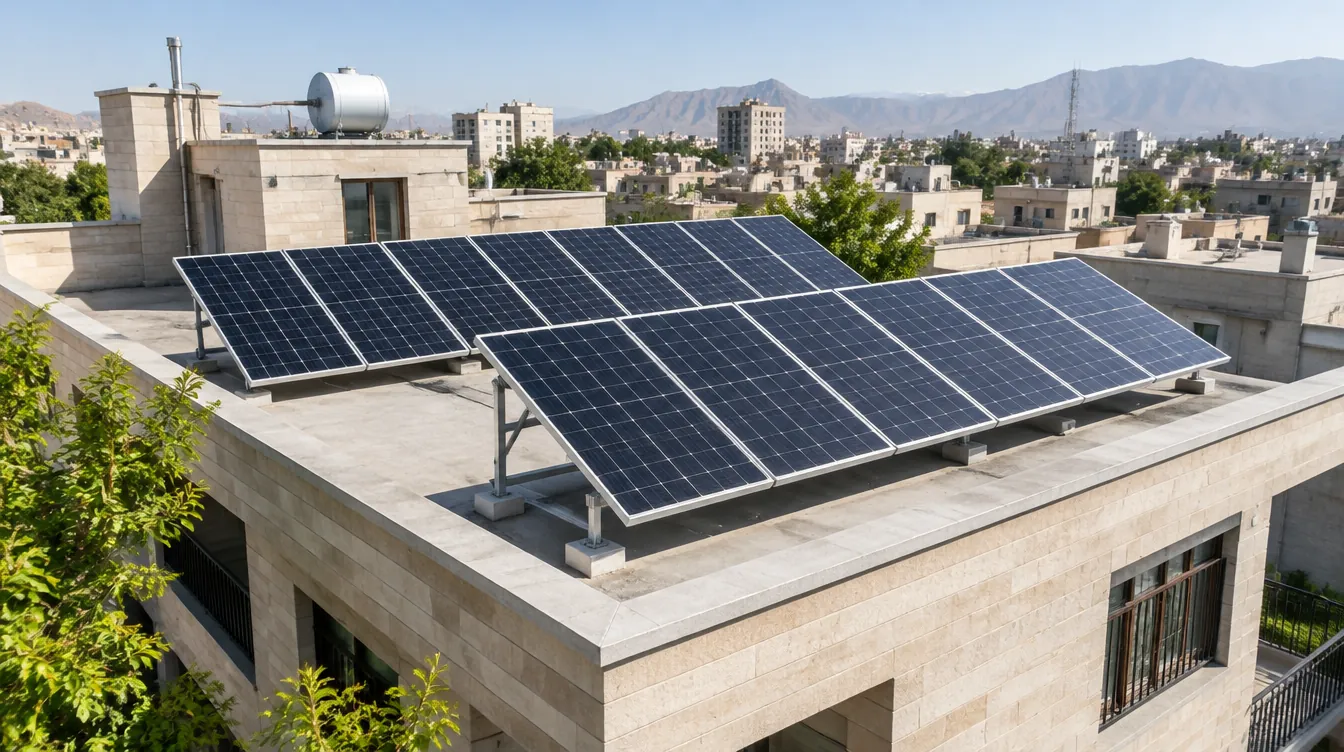
Module surface is roughly 5 to 6 m² per kW. On a flat roof, inter-row spacing against self-shading raises that to about 8 to 12 m² per kW; on a pitched roof with flush mounting, 5 to 6 m² is enough. In the northern hemisphere face south, with annual tilt roughly equal to site latitude. Shading is not linear: a chimney shadow across a few cells can pull down a whole string.
Two further reasons real arrays end up larger: datasheets typically warrant under one percent power loss per year, and household load grows. Start from the sizing calculator, then send consumption and roof data to the quotation request form.
Frequently asked questions
How many solar panels does an average home need?
It depends on consumption, not house size. A household using 300 kWh a month needs roughly 3 kW — about seven 450 W panels at 4.5 peak sun hours.
How much electricity does one 550 W panel produce per day?
At 4.5 peak sun hours and a 0.75 performance ratio, a 550 W module averages roughly 1.9 kWh per day, and about 2.3 kWh at 5.5 peak sun hours. These are annual averages.
How much roof area does a 5 kW array need?
The modules occupy roughly 25 to 30 square metres. On a flat roof with tilted racking and anti-shading spacing, plan for about 40 to 60 square metres of clear roof.
Does a system without batteries need fewer panels?
Usually yes. A grid-tied array is sized to annual consumption, while an off-grid array is sized to the worst month with days of autonomy and depth of discharge factored in.
Related products
All Solar Panels