The cost of a home solar plant is not one number; it is the sum of about ten line items. Any figure published today is wrong within weeks, but the cost structure holds: which items scale with kilowatts, which are near-fixed, and what share each takes. This article maps it and quotes no prices.
What is actually on the invoice
Modules
Panels are not the largest line. In a grid-tied system they are roughly a third of the bill; the rest goes to conversion, mounting, safety and labour. Panel count follows from consumption — see how many panels a home needs.
Inverter
The inverter converts DC to usable AC and is the most expensive electronic component. Its family — grid-tied, off-grid or hybrid — changes the cost structure, since a hybrid also manages charging. Compare them on the inverter category page.
Mounting structure
The structure carries module weight plus wind and snow load for two decades. Pitched roofs with simple rails are cheaper than ballasted flat-roof frames, and ground mounting adds foundations. Not a place to economise — a structural failure takes the array with it.
Battery and charge controller
In any system with storage, the battery is the most expensive single line and often exceeds panels and inverter combined. Capacity comes from evening load and days of autonomy, and usable depth of discharge decides what you buy: roughly 80 to 90 percent of nameplate for LiFePO4, about 50 percent for lead-acid. See solar batteries.
The lines buyers forget
- DC and AC cabling — UV and temperature resistant, cross-section set by run length; undersizing returns as permanent voltage drop.
- Protection — DC isolator, string fuses, surge arresters, AC breaker, earthing. Above several hundred volts DC these are life-safety items.
- Metering and grid connection — bi-directional metering and connection-point work, to local utility rules.
- Labour and transport — the installation team, delivery to site, commissioning.
What scales with kilowatts
- Scaling: modules, structure, DC cable, fuses, batteries — double the system and these roughly double.
- Semi-fixed: inverter and protection panel; a 5 kW inverter does not cost twice a 2.5 kW one.
- Near-fixed: crew mobilisation, lifting gear, earthing, metering, administration — the same for 2 kW or 8 kW.
Why small systems have a worse cost per watt
Cost per watt therefore rises as the system shrinks: fixed costs spread across fewer watts. If roof and budget allow, build the right capacity in one stage — the second round repeats those fixed costs.
Share of total by line item
Relative shares, not prices, as ranges — they shift with system type, equipment, transport distance and roof conditions.
| Line item | Grid-tied share | Off-grid or hybrid share |
|---|---|---|
| Solar modules | 25–35% | 12–20% |
| Inverter and charge controller | 15–25% | 10–18% |
| Battery | — | 35–50% |
| Mounting structure | 8–15% | 5–10% |
| Cabling, switchgear, protection | 8–15% | 5–10% |
| Installation labour | 10–20% | 8–14% |
| Transport to site | 2–5% | 2–5% |
| Metering and grid connection | 3–8% | negligible |
Why off-grid costs more per delivered kWh
Several effects compound: batteries are expensive; part of the purchased capacity is unusable, because at 50 percent depth of discharge you buy two kWh of nameplate to deliver one; every pass has round-trip losses; and storage has a finite cycle life, so it is replaced at least once while modules carry long-term warranties. Compare cost per delivered kWh over the system's life, not the opening invoice.
Recurring costs
- Battery replacement — the largest periodic cost of any stored system; cycle life depends on chemistry, temperature and depth of discharge.
- Cleaning, inverter service and retorquing DC connections — smaller items, though soiling losses in dusty climates exceed the cost of washing.
What to have ready for a quotation
- Consumption in kWh for several recent periods, ideally a year.
- System type: grid-tied, off-grid or hybrid — or your reason for buying.
- Roof type, free area, orientation and site access.
- Midday shading and the distance from array to distribution board.
- With storage: which loads must stay live, and for how long.
Estimate capacity with the solar sizing calculator, then submit it through the quotation request form. For project and wholesale enquiries, use contact us.
Frequently asked questions
What is the most expensive part of a home solar system?
In a grid-tied system, modules and inverter take the largest shares and neither dominates. In any system with storage, the battery is the biggest single line and can approach half the total.
Why do solar panels seem expensive?
Because buyers compare a whole system's price against the price of panels alone. Inverter, structure, cabling, protection, labour and transport all have to be paid for, and part of the cost does not scale with size.
Is a smaller system always cheaper?
The total is lower but the cost per watt is usually higher, because fixed costs spread across fewer watts. Building the right capacity in one stage generally beats staging it.
What information is needed for an accurate quotation?
Recent consumption in kWh, roof type with free area and orientation, shading, distance from array to distribution board, and the system type. With storage, add the critical load list.
Related products
All Hybrid Inverters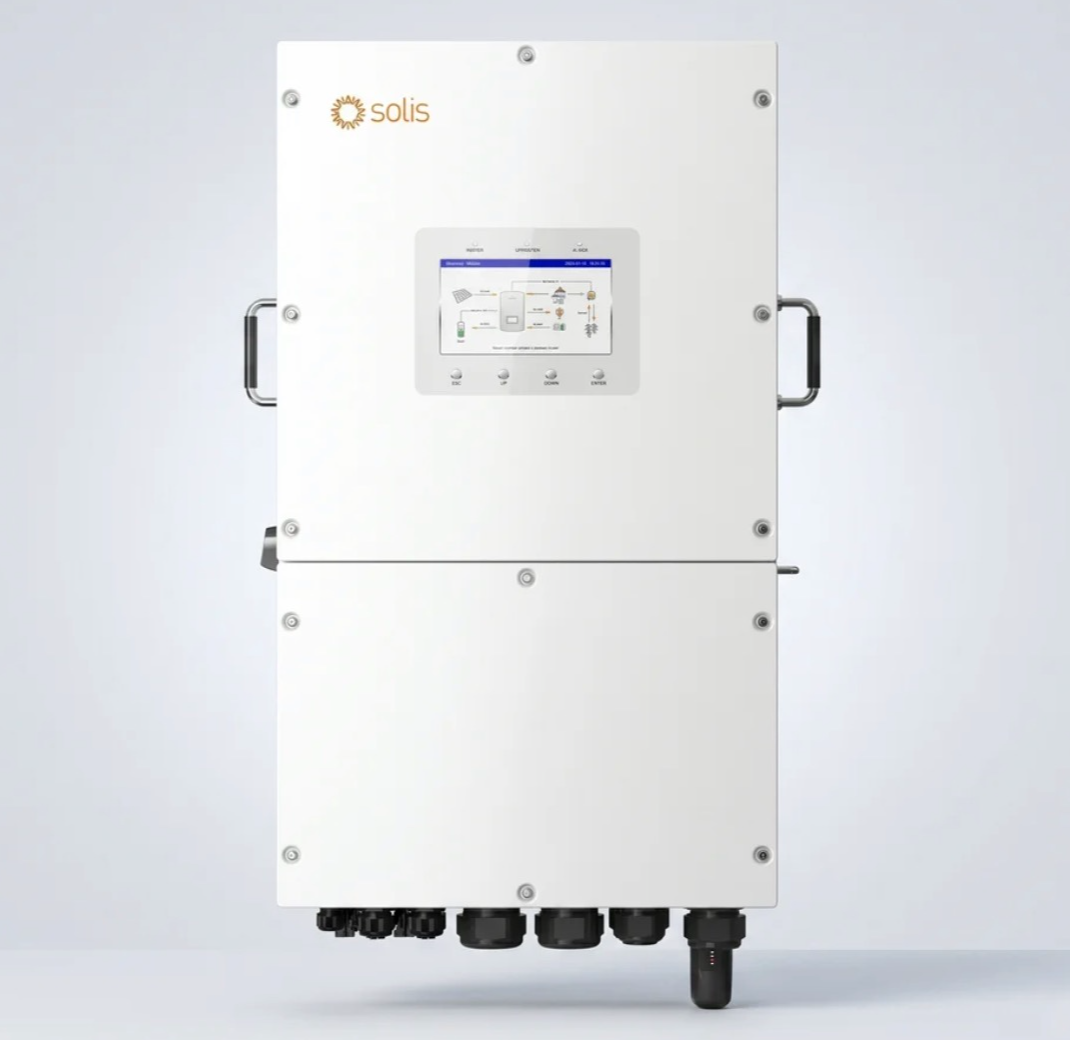
Solis S6-EH1P16K03-NV-YD-L Single-Phase 16 kW LV Hybrid Inverter