The three inverter topologies answer three different problems. Grid-tied reduces the bill where the grid is stable, off-grid serves sites with no grid, and hybrid covers a grid that exists but cannot be relied on. The point most buyers miss: a plain grid-tied system shuts down during a blackout, even at sunny noon.
What each topology does with the energy
A grid-tied inverter converts array DC into AC synchronised with the utility: on-site load first, surplus exported, shortfall imported, nothing stored — the grid acts as a virtual battery. See the grid-tied inverter category.
An off-grid inverter has no utility connection; the array charges a battery bank that serves all load, so both are sized for the worst month, not the average. See the off-grid inverter category.
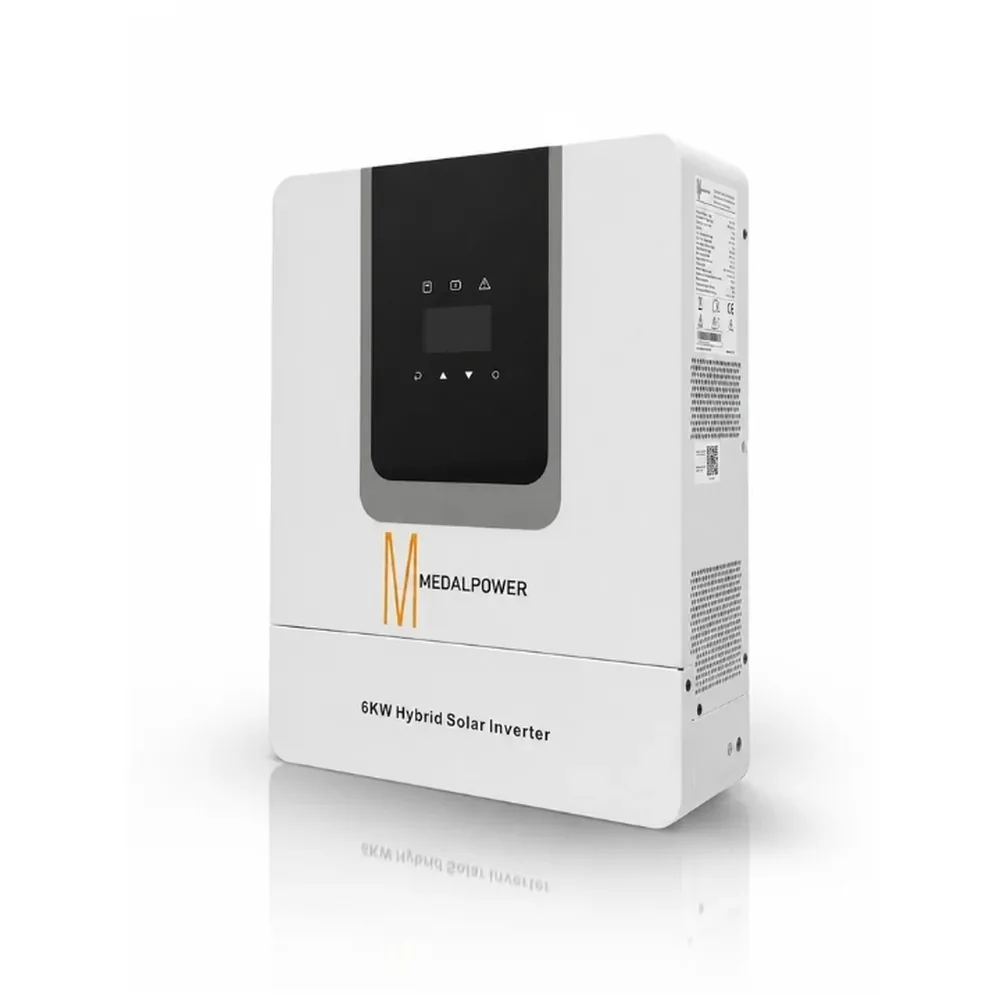
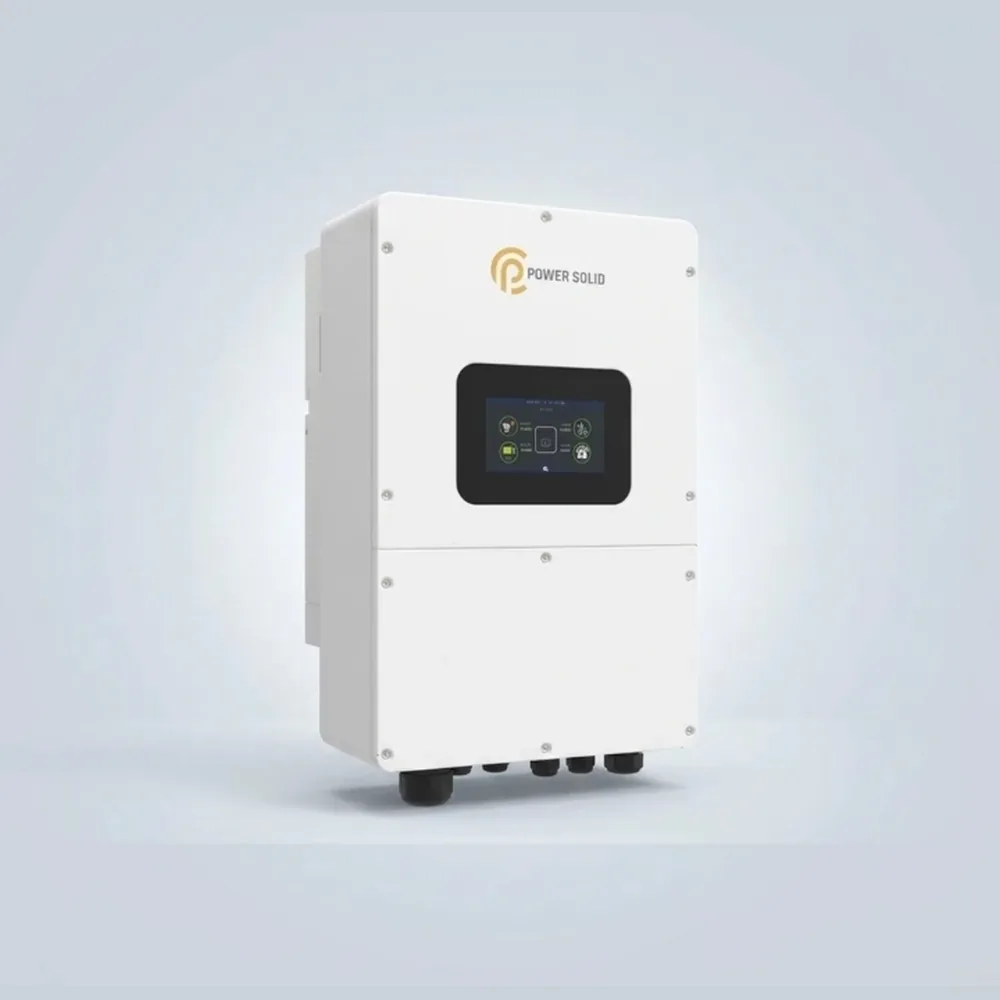
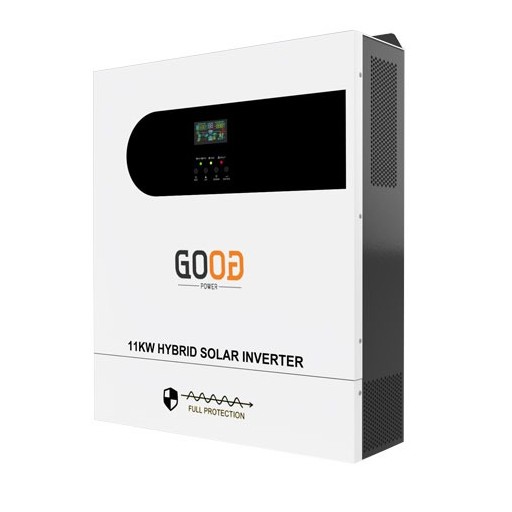
A hybrid inverter connects to both, with firmware setting priority: load, then battery charging, then export; during an outage its backup output carries the critical circuits. See the hybrid inverter category.
Anti-islanding: why a grid-tied inverter goes dark
A grid-tied inverter uses the utility's voltage and frequency as its phase reference. When the grid fails that reference disappears, and anti-islanding protection forces the inverter to disconnect within a fraction of a second.
The reason is safety: continued export would keep a line energised that repair crews treat as dead, and reconnection to an out-of-phase island can damage equipment on both sides. It is also why the inverter waits before reconnecting when the grid returns. So if you need power during outages, a plain grid-tied system will not deliver it. Export is metered bidirectionally and settled under the contract signed with the local utility, whose terms change over time.
When a battery genuinely pays for itself
The battery is the most expensive part of any storage system and, unlike a module, it is consumable. Decide on use:
- No grid at all — irrigation pumps, remote sites, telecom masts.
- Downtime has a real cost — shop refrigeration, medical equipment, servers.
- Load is mostly at night — midday production and evening consumption do not coincide.
Where the grid is stable and the goal is a lower bill, a battery adds cost without adding generation. If you need one, usable capacity beats nameplate: LiFePO4 is typically usable to about 80 to 90 percent depth of discharge, against roughly 50 percent for lead-acid.
MPPT count and string design
Each MPPT input sets one operating point for everything connected to it, so all modules on one input should share model, tilt, orientation and shading. An east-west roof needs two independent MPPTs.
Two voltage limits govern the string: Voc at the coldest site temperature must stay below the inverter's maximum input voltage, and Vmp at the hottest above the MPPT window's lower bound. See the explanation of MPPT.
Sizing the inverter
DC/AC ratio. Array kWp and inverter kW need not match; grid-tied designs commonly run 1.1 to 1.3, because the array reaches nameplate only a few hours a year and a slightly smaller inverter is better loaded morning and evening. Push it too far and midday clipping wastes energy. Off-grid is different: the array must also refill the battery. Estimate with the solar system sizing calculator.
Surge. Fridge motors, pumps and fixed-speed compressors draw several times rated current at startup, commonly three to seven times for a few seconds, so off-grid and hybrid inverters publish a separate surge rating.
Waveform and phases
Modified sine output is a stepped approximation. Simple resistive loads tolerate it, but motors and compressors run hotter and shorter, and some power supplies and medical equipment refuse to start; for any permanent installation, pure sine is the only sensible choice.
Phase count follows the property's supply: small residential systems are usually single-phase, while three-phase inverters suit larger capacities and three-phase motors, pumps or lifts.
Comparison table
| Criterion | Grid-tied | Off-grid | Hybrid |
|---|---|---|---|
| In a blackout | Shuts down (anti-islanding) | Runs independently | Backup output stays live |
| Battery needed | No | Mandatory | Yes, sized to need |
| Grid connection | Required | None | Bidirectional |
| Typical use | Bill reduction, stable grid | Sites with no supply | Unreliable grid |
| Complexity | Low | High (battery upkeep) | Medium to high |
Send your load profile and critical circuits through the request for quotation form.
Frequently asked questions
What is the difference between on-grid and off-grid inverters?
A grid-tied inverter is connected to the utility, has no battery, exports surplus, and shuts down in a blackout. An off-grid inverter runs independently, always has a battery bank and serves the whole load from it.
Does a grid-tied inverter work during a power cut?
No. It needs grid voltage and frequency as a phase reference, and anti-islanding protection disconnects it the moment the grid fails, so repair crews are not exposed to a live line. Working through outages requires a hybrid inverter and a battery.
What does a hybrid solar inverter do?
It connects to both grid and battery and manages the order energy is used: load, then charging, then export. During an outage its backup output carries the critical circuits, so it is the only topology that both lowers the bill and keeps working.
Related products
All Hybrid Inverters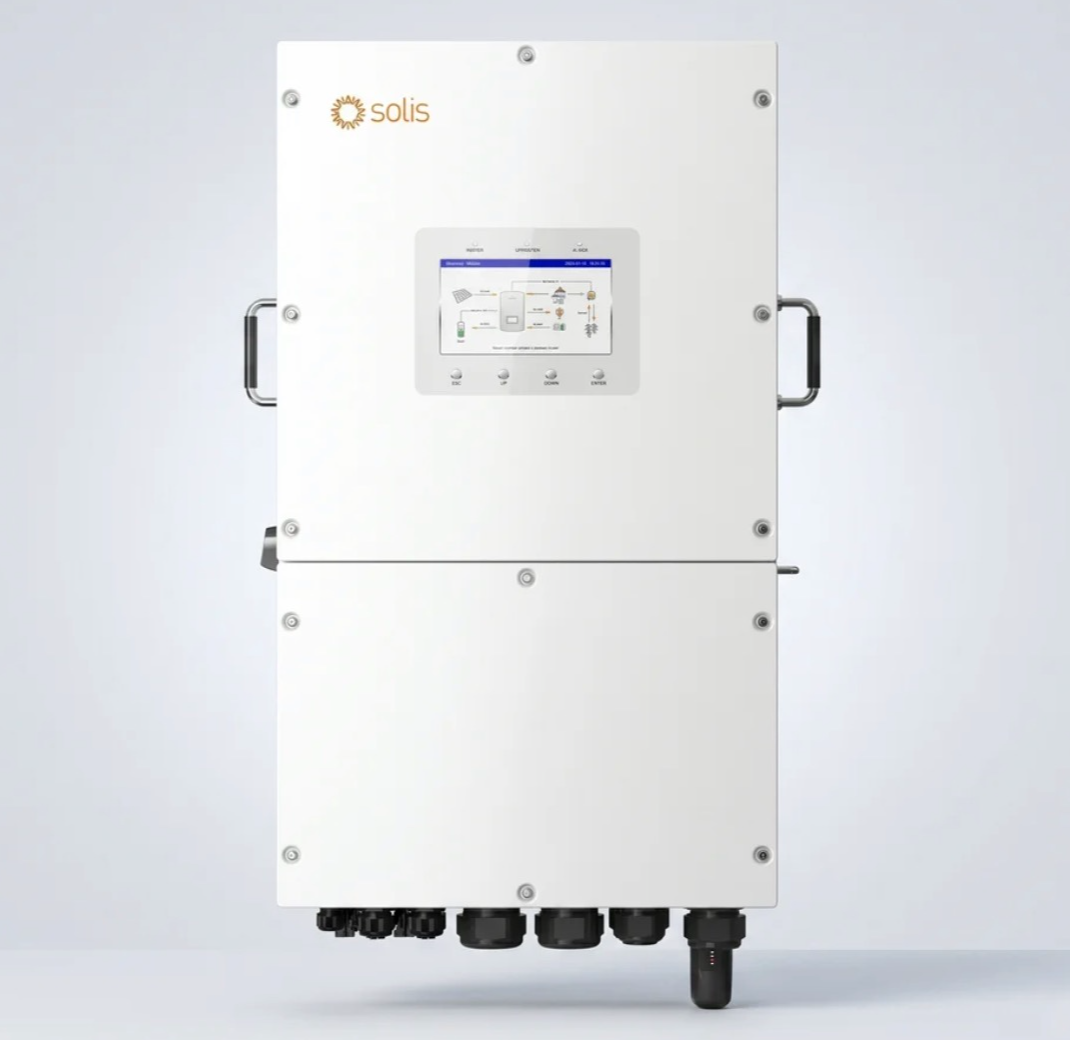
Solis S6-EH1P16K03-NV-YD-L Single-Phase 16 kW LV Hybrid Inverter