Depth of discharge (DoD) is the share of a battery's nominal capacity taken out in one cycle. Draw 40Ah from a 100Ah battery and that cycle ran at 40% DoD. This single figure decides how many years a bank lasts and how much larger than your actual energy need it has to be built.
DoD versus state of charge
The two are complements and always sum to 100%: a bank at 70% state of charge sits at 30% DoD. Inverter displays and battery management systems usually report state of charge, while datasheets and cycle-life tables are written in DoD, and confusing the two is a common sizing error. Note also that estimating state of charge from voltage is only meaningful at rest — voltage sags under load and makes a bank look emptier than it is.
Nominal capacity versus usable capacity
Usable capacity ≈ nominal capacity × permitted DoD × discharge-rate factor × temperature factor
Nominal capacity is measured under stated conditions, typically 25°C and a defined rate such as C20. Lead-acid chemistries give less capacity at faster rates: a 200Ah C20 battery may behave closer to 160Ah at C5. LiFePO4 batteries are far more stable in this respect, so compare the quoted C rate as well as the amp-hour number.
DoD against cycle life
The deeper each cycle, the fewer cycles to expect. The ranges below are typical of published datasheets, not a performance promise for any particular product.
| DoD per cycle | Lead-acid and gel (cycles) | LiFePO4 (cycles) |
|---|---|---|
| 20% | 1200-2000 | above 6000 |
| 30% | 800-1400 | 5000-8000 |
| 50% | 400-700 | 3500-6000 |
| 80% | 200-350 | 3000-5000 |
| 100% | 150-300 (not advisable) | 2000-3500 |
Two caveats. "End of life" in battery literature normally means capacity has fallen to about 80% of the original, not total failure. And every model differs by manufacturer, exact chemistry, operating temperature and charge quality, so read the figure from that product's datasheet. In practice, designers hold lead-acid banks to roughly 50% daily DoD and run LiFePO4 banks at about 80-90%.
The damage mechanism differs. In lead-acid, deep discharge and long periods at low charge let lead-sulphate crystals grow coarse and stable, permanently removing active plate area — compare the families in the lead-acid battery range.
Why a lead-acid bank is built at roughly double the energy you need
It follows directly from that 50% figure. If the loads need 6 kWh overnight and you may only take half the bank, nominal capacity has to be around 12 kWh. The same logic explains why lead-acid banks are so much heavier and bulkier for a given load. On a LiFePO4 bank running to 80-90%, the multiplier falls to roughly 1.1-1.25, so the same 6 kWh usable needs about 7-7.5 kWh nominal.
Temperature derating
- Cold cuts capacity. Near 0°C a lead-acid bank typically delivers around 20% less than its catalogue figure, and more is lost as temperature drops further.
- Heat cuts life. A common rule of thumb is that each 10°C rise in average operating temperature roughly halves lead-acid service life.
- Sub-zero lithium charging. Charging LiFePO4 below freezing damages cells; the BMS normally blocks it. In cold locations choose a heated model or a warmer battery room.
- Temperature compensation. Fit and enable the battery temperature sensor on the charge controller or inverter-charger for any lead-acid bank.
A worked sizing example
- Total the overnight load — say 4 kWh.
- Choose days of autonomy; at 1.5 days the usable requirement is 6 kWh.
- Apply conversion efficiency; at about 0.9 for inverter and cabling, that becomes roughly 6.7 kWh.
- Divide by permitted DoD: about 13.4 kWh nominal for lead-acid at 50%, about 8.4 kWh for LiFePO4 at 80%.
- Convert to amp-hours: on a 48V bank, near 280Ah and near 175Ah respectively.
- Add margin for a cold battery room or fast discharge.
That is the skeleton; the final number depends on the model, its C rate and its datasheet. Run your own consumption through the solar system sizing calculator, and remember the array must be sized on worst-month peak sun hours, not the annual mean.
Frequently asked questions
What depth of discharge is acceptable for a solar battery?
Lead-acid and gel banks are normally designed around 50% daily depth of discharge, and going deeper shortens life quickly. LiFePO4 banks typically run to about 80-90%. The permitted figure for any product is stated on its datasheet and should be the basis of the design.
Why must the bank be larger than the energy I actually use?
Because only part of nominal capacity is usable. On lead-acid at 50% DoD, 6 kWh of usable energy needs roughly 12 kWh nominal. On a LiFePO4 bank at about 80% DoD, the same usable energy is reached with around 7.5 kWh nominal.
Can a lithium battery be discharged to 100%?
The BMS will allow discharge to the end of the safe window, but doing so reduces the number of cycles to expect. Solar designs normally settle on 80-90% DoD to balance usable capacity against service life, and the exact window is set by the model's datasheet.
Related products
All Lithium Batteries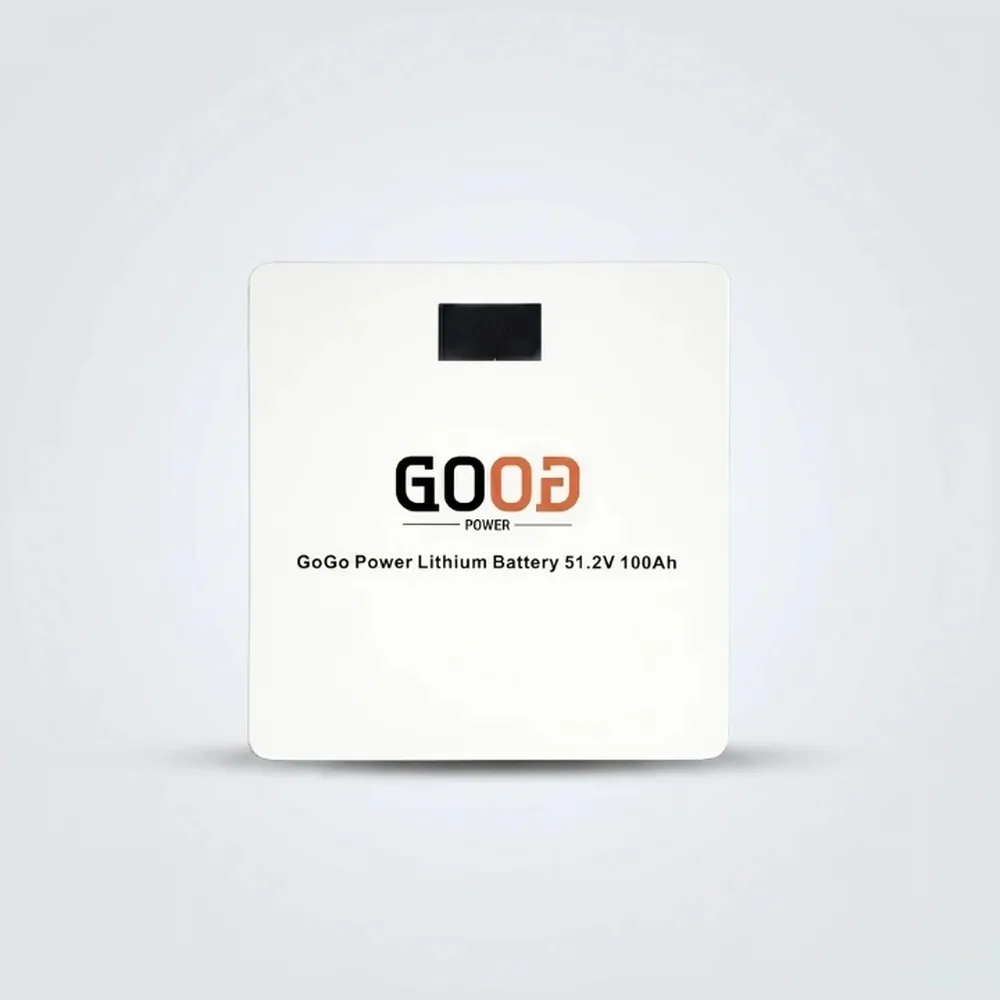
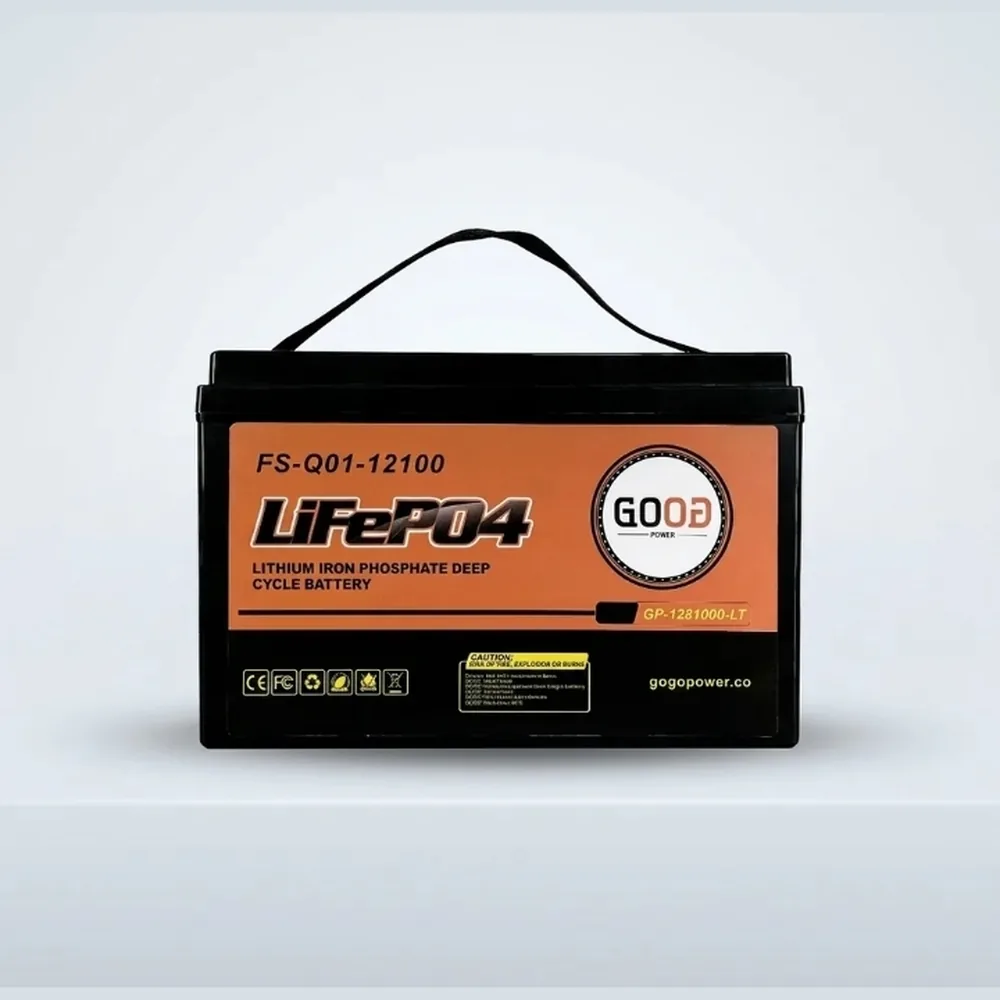
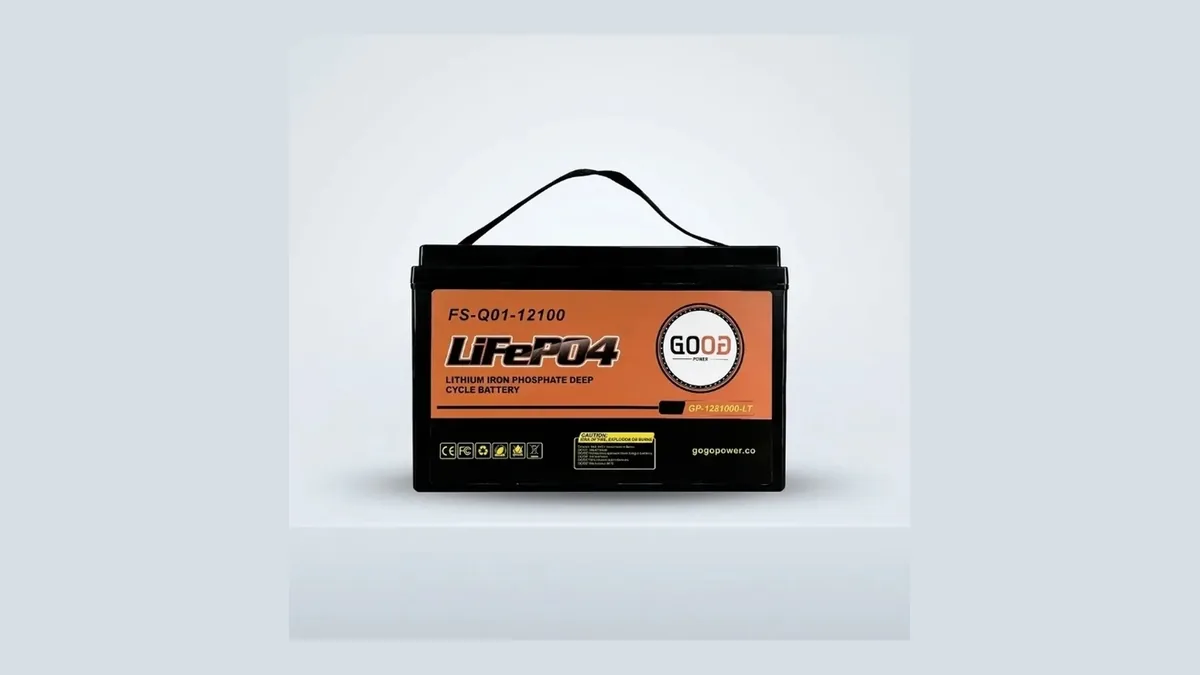
GOGO Power FS-Q01-12100 12V 100Ah LiFePO4 Battery