
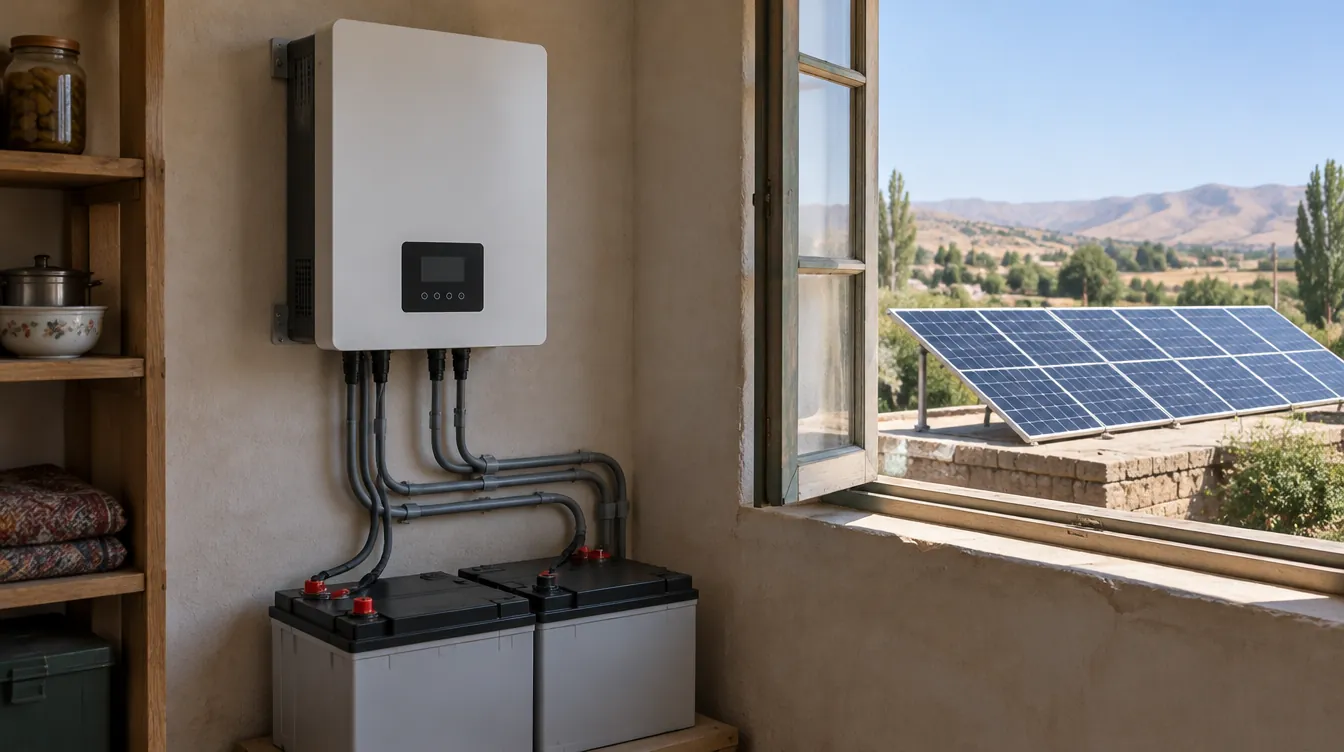
Many buyers ask for “a sunverter” before the outage season; then the questions start: is 3 kW enough or 6? A 12 V or 48 V battery? Are panels required? Get these wrong and the unit trips under the fridge and pump, or is oversized and costly.
What is a solar inverter charger (sunverter)?
“Sunverter” is a trade name used in some markets for an all-in-one solar inverter charger: several devices in one box, usually working with batteries in off-grid or hybrid systems. It is not a standard technical term; the model's own specification is what counts. Its main parts are listed below.
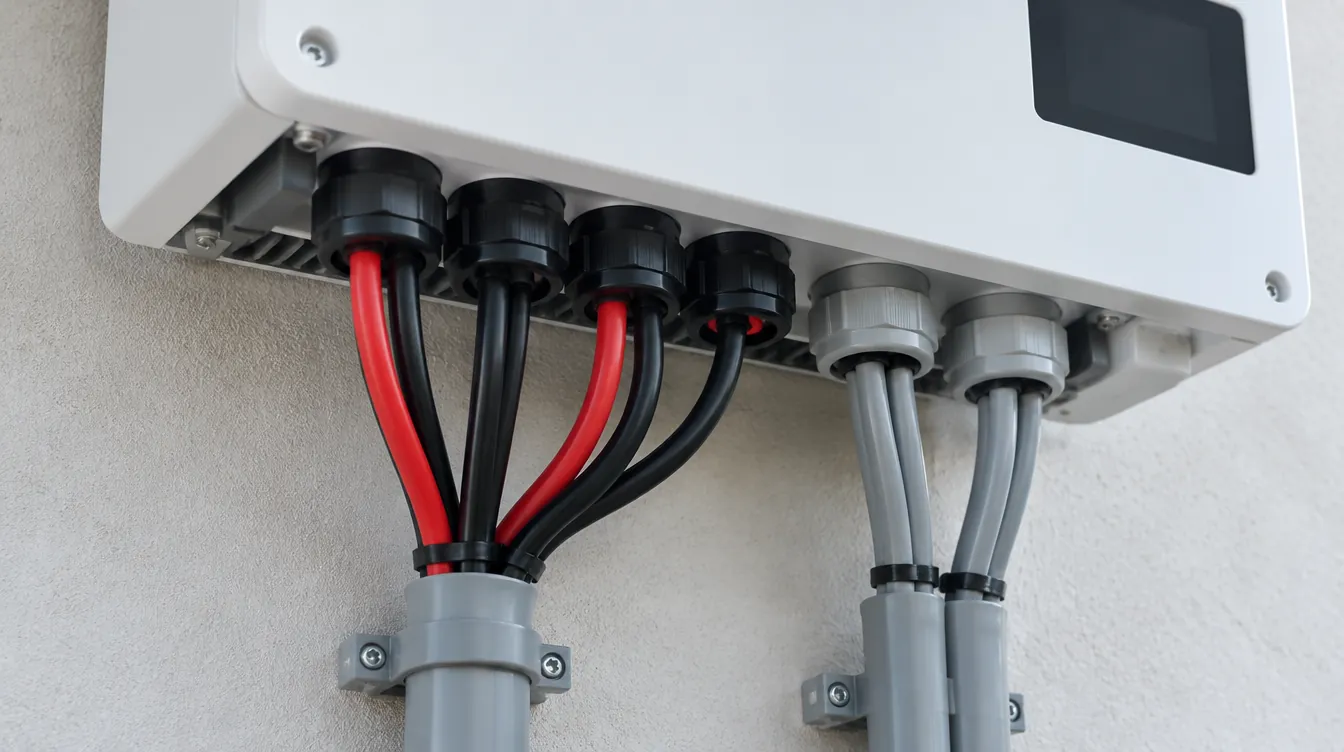
- Inverter: turns battery DC into household AC.
- AC charger: charges the battery from the grid or a generator.
- Solar charge controller: MPPT or PWM, depending on the model; sends solar energy to battery and loads.
- Automatic transfer switch: keeps loads powered when the grid fails.
- Display and settings: status, source priority and battery type.
Sunverter vs plain inverter, UPS and on-grid inverter
| Device | Grid charging | Solar input | Battery | Typical use |
|---|---|---|---|---|
| Plain inverter | No | No | Yes | Battery power to household AC |
| Inverter charger without PV | Yes | No | Yes | Home or shop backup charged from the grid |
| UPS | Yes | Usually no | Yes | Computers and sensitive equipment in short outages |
| Sunverter | Yes | Yes | Usually yes | Backup or independent power with panels |
| On-grid inverter | Not applicable | Yes | No | Feeding the grid; usually shuts down when it fails |
An on-grid inverter is not built for backup; see on-grid, off-grid and hybrid inverters. Most units sold as sunverters fall under off-grid inverters and chargers; larger ones move towards hybrid.
Operating modes and the MPPT or PWM controller
Mode names vary, but the logic is usually one of three: solar first (panels feed loads, surplus charges the battery), grid first (grid feeds loads and the inverter steps in only during outages) or battery first (grid joins only when the battery reaches a set level, common on weak grids). Charging source is usually adjustable too; the installer sets both.
A PWM controller pulls panel voltage close to battery voltage and suits small arrays. An MPPT controller tracks the maximum power point and converts the higher string voltage down to battery voltage, giving more layout freedom; see what MPPT is and why it matters. Most important is the PV input voltage window: string open-circuit voltage rises in the cold and must stay under the unit's maximum even on the coldest day; in heat, string voltage must not fall below the MPPT range. A qualified installer should design this from both datasheets.
Choosing sunverter capacity: 2, 3, 6 or 10 kW?
Size from your list of loads, not a headline figure, weighing the three factors below separately.

- Output power: add up loads running together and leave a margin; real watts are usually below the VA figure, depending on power factor.
- Starting current: fridges, pumps and air conditioners can draw several times their running current at start-up; if listed, size up.
- Battery voltage: small models often use 12 or 24 V, larger ones 48 V; higher voltage means less current for the same power (W = V × A). The bank must match the unit's rating exactly.
| Hypothetical example | Main loads | Sunverter | Battery | Panels |
|---|---|---|---|---|
| Cabin | Lamps, TV, modem, small fridge | About 2 kW | 12 or 24 V | About 1 kW |
| Apartment backup | Lighting, fridge, TV, pump, laptop | About 3 to 4 kW | 24 or 48 V | Optional, 1 to 2 kW |
| Larger home | Plus air conditioner or motor loads | About 6 to 10 kW | 48 V | About 4 to 6 kW |
These figures are hypothetical, not a calculation, and the array must stay within the unit's PV input limit. To choose which appliances go on backup, see home backup power.
Examples from our catalog
A “Medal Power sunverter” usually means the brand's off-grid and hybrid solar inverters. Examples, by listed specifications only:
- Medal Power 3.5 kW off-grid inverter: wall-mounted, for off-grid and backup use; confirm PV input and controller type.
- Medal Power 6 kW hybrid inverter: single-phase, wall-mounted, built-in charge controller, LCD.
- GoGo Power pure sine wave solar inverter: off-grid, wall-mounted, built-in charge controller.
- Power Solid 10 kW hybrid inverter: colour display, two MPPT inputs, separate panel, battery, grid, generator and backup connections.
All products carry an authenticity guarantee and official warranty and ship from Tabriz.
Common buying mistakes
- Sizing on running power only: start-up current trips the unit on overload.
- Mismatched battery voltage against the unit's rating.
- Too many panels in series: cold-weather voltage exceeds the input limit and can damage the unit.
- Modified sine wave for motors: pure sine is safer for compressors and pumps.
- DIY wiring: high-current battery and panel wiring needs proper fuses and a qualified electrician or installer.
Send your load list, motor loads, battery choice and supply phase via the request for quotation form; installers and wholesalers get trade pricing there too.
Frequently asked questions
How is a sunverter different from a hybrid inverter?
The line is blurred; many sunverters are off-grid hybrid inverters in practice. The usual difference is grid export, which you should check in the model's specifications.
Does a sunverter work without solar panels?
Yes; most models can charge from the grid or a generator alone, and panels can be added later within the PV input limit.
Does a sunverter work without a battery?
Some models can, but many need a battery for stable operation. Without one, you have no backup during a night-time outage.
How do I choose the battery voltage?
The sunverter sets it, and the bank must match exactly. For higher power, 48 V usually makes sense: cable current is lower.